
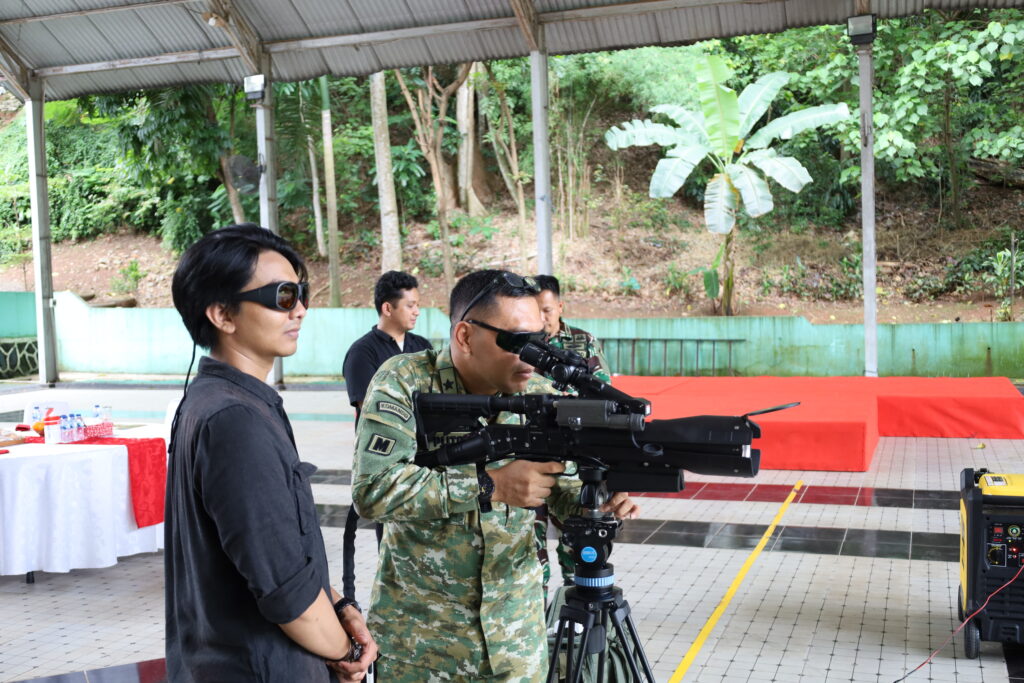
The landscape of Southeast Asian maritime and land defense is undergoing a seismic shift. On Monday, December 15, 2025, a pivotal moment in Indonesian military history took place at the Army Special Forces (Kopassus) training grounds. Under the direct supervision of Kaharuddin Djenod, the President Director of PT PAL Indonesia, a series of rigorous trials for a newly developed Laser Gun system were successfully conducted.
This trial serves as the final technical hurdle before the system is transported to PT PAL’s headquarters for a grand commissioning ceremony scheduled for Thursday, 18 December 2025.
The Dawn of Directed Energy Weapons (DEW) in Indonesia
For decades, traditional ballistics have dominated the battlefield. However, the introduction of Directed Energy Weapons (DEW), specifically high-intensity laser systems, marks Indonesia’s entry into the “First Class” of global defense innovators.
The laser gun tested at the Kopassus is designed to provide surgical precision with zero ammunition cost, targeting drones, electronic sensors, and light-armored threats.
Key Technical Specifications
While many details remain classified for national security, the trial focused on three core pillars:
1. Beam Coherence: Ensuring the laser remains focused over long distances.
2. Thermal Management: Managing the immense heat generated during rapid-fire cycles.
3. Target Acquisition: Integration with AI-driven tracking systems for anti-drone warfare.
Kaharuddin Djenod: Visionary Leadership at PT PAL
Since taking the helm in 2021, Kaharuddin Djenod has been the primary architect behind PT PAL’s modernization. His presence at the Army Special Forces base underscores the importance of this project. Under his leadership, PT PAL has transitioned from a traditional shipbuilder into a high-tech defense integrator.
The Synergy Between PT PAL and Special Forces
The decision to hold the trials at the Army Special Forces (Kopassus) facility was strategic. The elite unit provided a high-pressure environment to test the weapon’s durability and ease of use in the field. This inter-branch cooperation (Navy-standard tech being tested by Army elite) signals a more unified approach to the Indonesian National Armed Forces (TNI) modernization.